
A Guide to Autocross
Written by:
Published: May 30, 2026 at 09:58
| Updated: May 30, 2026 at 11:27
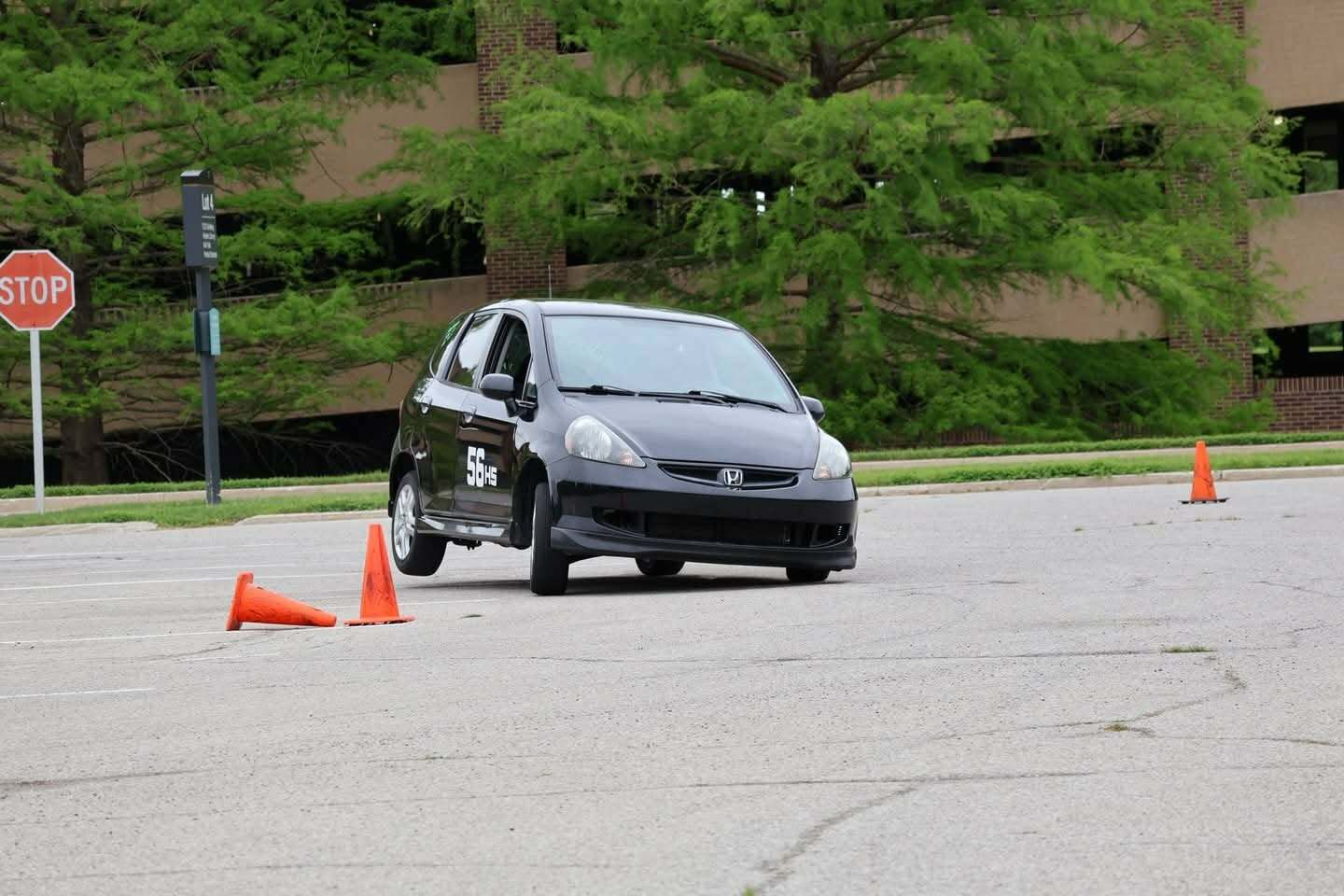
Photo by:
Min Khant
Photo credit © Min Khant
If you are curious about motorsports but afraid of the overhead costs or skill ceiling that may entail, Autocross offers the lowest cost and skill barriers to entry. These attributes make Autocross compelling: it is accessible without a race car or a pit crew to manage, and it can be done on a modest budget. Additionally, Autocross lets you drive your daily driver to the event, compete, and drive home.
As someone who started autocrossing, I wrote this guide to encourage those who want to start competitive driving, learn more about their cars, or simply have fun while meeting new individuals.
What is Autocross

Rick’s Lotus Exige: proof that you don’t need a racetrack to use a car like this properly. /© Min Khant
Autocross is a short point-to-point track, typically held in parking lots or airports, defined by cones and a timing system. The winner completes the course fastest. Because there is no passing, there are usually two cars on course at once on smaller sites, three to four on larger sites.
Multiple organizations host Autocross; this guide focuses on the Sports Car Club of America (SCCA). They organize many forms of motorsports across the US, and their SCCA Solo program is the most popular. SCCA has multiple classes, ranging from
stock “street” categories to open-wheel purpose-built monsters.
SCCA Solo events are typically held on weekends. They hold school towards the beginning of the season. Highly recommended for anyone starting out. If you are discovering this mid-season, look for a “Fun” event. These events are not for points, tend to be more relaxed, and are ideal for first-timers: people will be swapping cars and are more willing to do ride-alongs.
Sounds Cool, Where do I Start?
Start by finding nearby events, as the SCCA has regions across the country. Their site explains what to bring: a driver’s license, a vehicle in good working order, and a helmet. Drivers under 18 with a license can still compete with a signed parental waiver.
Most cars can participate, but the vehicle must be able to handle the course safely. Many stock SUVs and trucks are restricted due to rollover risks, though some can compete depending on specific factors. If that applies to you, contact your region’s safety tech for clarification. Otherwise, the vehicle needs to be mechanically sound: no broken suspension parts, the battery secured, pedals functioning properly, seatbelts functioning properly, and tires with no exposed metal. Your car will be inspected at “Tech” when you arrive.
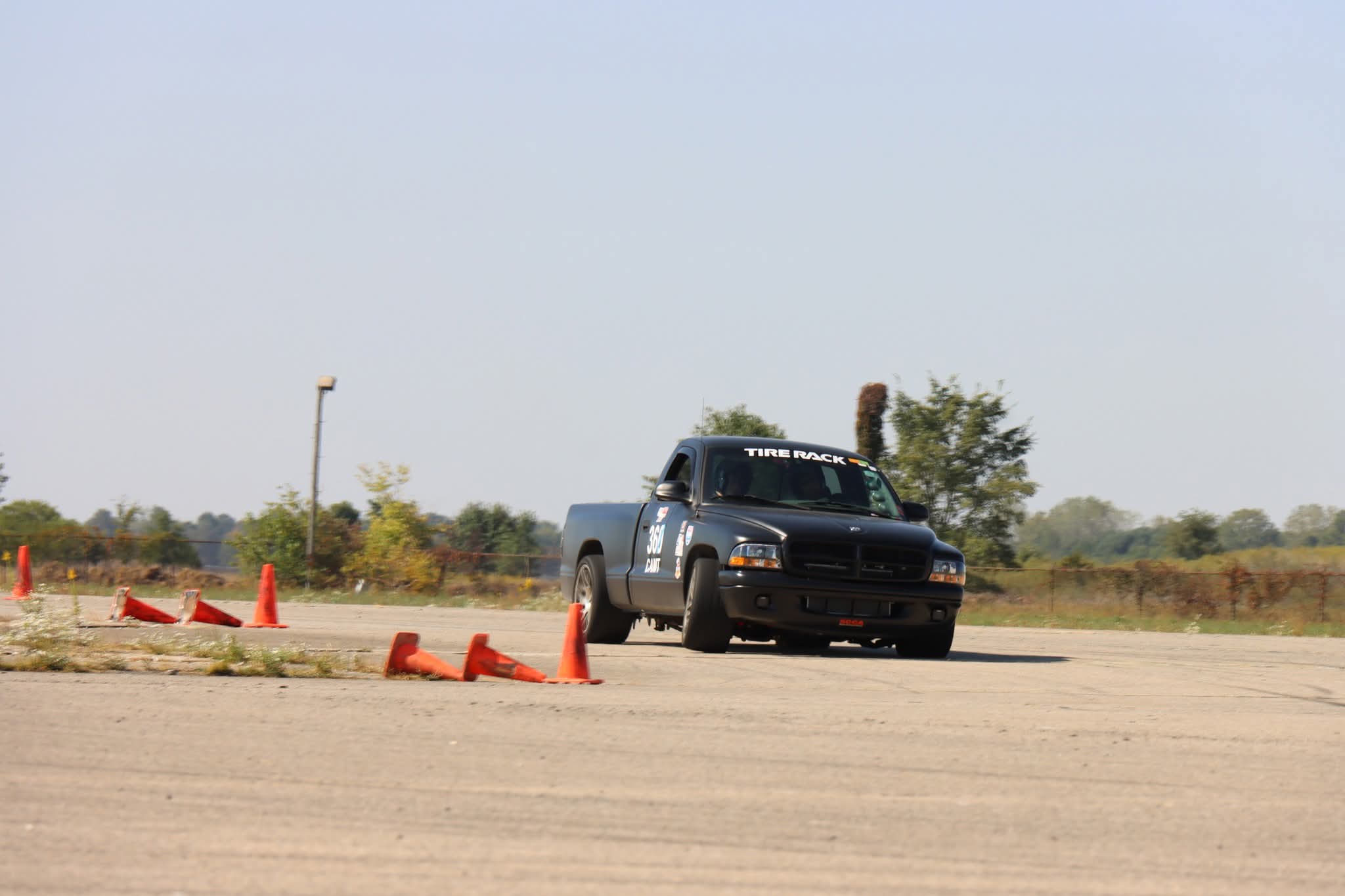
Brian’s 1999 Dakota is always a crowd favorite. He’s genuinely competitive in class, and when the day wraps up, nobody hauls cones home faster. /© Min Khant
On helmets: a standard DOT approval is not sufficient. SCCA currently requires a Snell M or SA number and a certification dated 2010 or later to prevent the use of older, degraded helmets. If you do not own one, do not let that deter you; many regions have loaner helmets available. Different organizations will have different restrictions; reach out or look into them. Check your region’s specific requirements before the event.
Geared Up: Your Next Steps
Read the event info carefully. They will list requirements and everything important so you can compete. They tend to be punctual, too, so the event won’t wait for you to show up before starting. If you miss registration or tech, you have gone from competitor to spectator. Before the event, try to find your class. If your car is stock, it will fall under the “street” category. Certain modifications may bump a car out of the street class and into the “prepared” or “touring” classes. The official rules and the class assistant will help prepare you for your first event. Car classes can change, but do not let that deter you from joining. For example, in my first year of Autocross, my Veloster N was in the DS class; this year, it was moved to GS. Ask an event organizer what class you should be in. Be honest in your modifications.
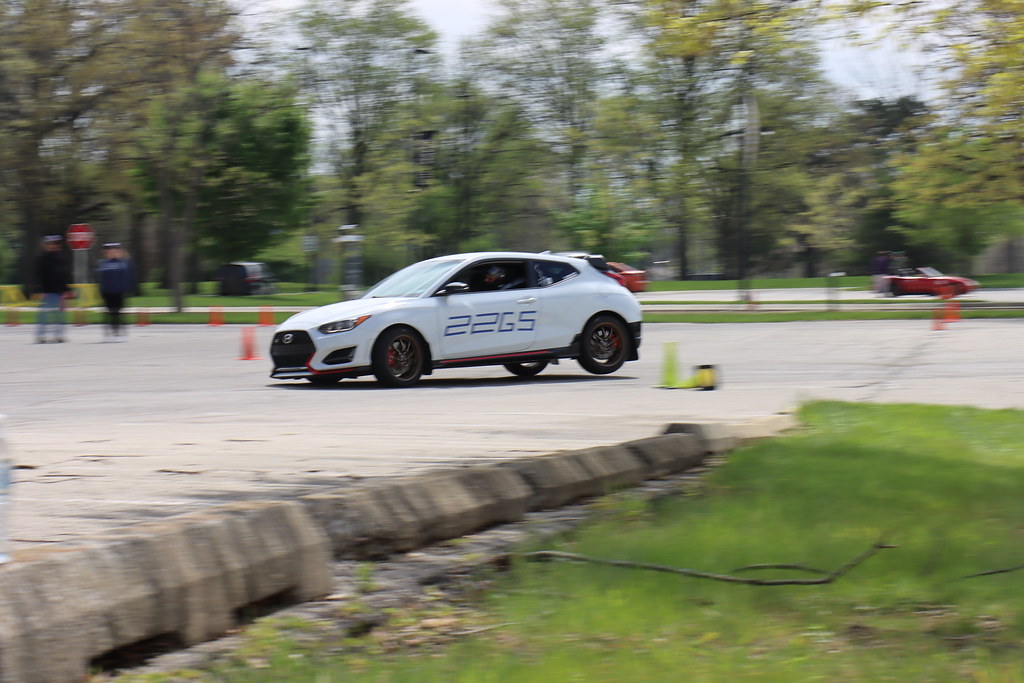
The Veloster N’s move to GS class didn’t slow it down any. /© Min Khant
Pick two numbers that no one else has when you register; these numbers are how you are identified while driving. Larger and legible numbers that contrast with the car are needed. If you have a blue car, do not use blue painter’s tape.
Show up before the deadline; this gives you extra time to figure things out rather than rushing. It’s okay to be nervous, so give yourself the extra moment to observe, explore, talk, and understand the event. Max out your course walks. Tour it solo, with a veteran, and on the novice walk. Use the pro-led novice walk to learn the best lines through the corners. Knowing the course will help you avoid getting lost while driving. Listen to the event organizers; they will announce the next hit time. That is when they will hold their drivers/safety meeting and discuss the work/run cycles.
Autocross events operate on a “work one, drive one” heat system. Your specific car class determines which heat you work and which you drive. Beginners usually start as corner workers resetting knocked-down cones, though advanced roles open up with experience. This volunteer system keeps entry fees low.
What else should I bring?
Close-toe shoes, card or cash for the event, water, and a good attitude are the bare minimum you will need to drive on the course. Honey catches more flies than vinegar, and a good attitude goes a long way. Do not let a mistake ruin your experience; that is why you are there. I ruined runs when I got super judgmental about them and only focused on what I had done wrong. That corner is behind you, and that cone is approaching fast. Focus on the now and what you can control.
Sunscreen. You will stand on asphalt for a long time as cars drive by. Shade is provided by cloud cover on the day; bring sunscreen, hats, and other items that protect you from UV rays. You know what is better than water? Cold water. Bring a cooler for water and food to help keep you hydrated. Do not drink only soda or energy drinks. Bringing food is always cheaper than buying fast food. Quick snack foods, like a sub or sandwich, are perfect.
Bring a chair so you have a place to rest when you are not working or driving. Make it better with some shade from a pop-up tent; just make sure you bring weights to keep the tent from flying off in the wind. Bring a personal electric scooter; aside from making hilarious Tik-Toks of people wiping out, they are great for quickly traveling across vast expanses of asphalt for a much-needed bathroom break. Just watch for cars, seriously, do not drive them on the course.
What if I want to be more competitive?

When your autocross build starts growing wings, you’ve committed to the bit. /© Min Khant
Before the event? Start with a good set of tires. Those will make you faster than any turbo upgrade on the course. Tire pressure is just as important, so bring a tire pressure gauge and a small compressor (most new vehicles have this instead of a spare). Chalk! Chalking your tires with sidewalk chalk can help you monitor how hard you are pushing the car and where you need to adjust your pressure. Have a veteran help you with this. A standard garden pump sprayer filled with water is a great budget tool for hot track days. Use it between runs to cool down your tires and prevent them from losing grip. If you drive a turbocharged car (like a WRX), spray the intercooler to fight heat soak. Keeping intake air cold preserves your engine’s power.
Get a camera, such as a GoPro, and record yourself. Record the track and review it when you can. There is an app called TrackAddict that lets you put the autocross course on your phone and compare runs. It has a learning curve to operate, but it is available on iOS and free on the App Store. A good phone mount can show you tons of data to help you improve.
Make the Most of the Day
Finally, talk to the veterans and pros. Have them do ride-alongs, even drive your car! Try to observe their driving line and braking points, check out their cars, and ask why or how they did mods. Drivers will set up tips and tricks on how to go faster. Make one adjustment at a time. You cannot tell if you are going faster because you changed tire pressures, braking points, and a different line. Focus on refining one at a time, then move to the next, and so on. Data logging helps streamline this process.
Autocross events reward preparation. Show up ready, ask questions, and do not be afraid to spin the car; you just found the limit and now know how it feels. Turning challenges and failures into adaptations is the whole point of Autocross and what makes it genuinely enjoyable.
